
Sea of Stars is nostalgia that remembers how to dream
There is a specific feeling that Sabotage Studio is chasing with Sea of Stars — the particular kind of wonder you felt at age eleven when a JRPG world opened up and every new town felt like a secret. Thierry Boulanger and his team have spoken about it in interviews, about recreating that magic of the Super Nintendo era without simply photocopying it. After 47 hours with the finished game, it's fair to say they get closer than almost anyone has managed in the last decade. It's also fair to say the seams occasionally show.
Sea of Stars is a turn-based RPG built around two protagonists, Zale and Valere, who are Solstice Warriors — warriors born of the sun and moon respectively, capable of neutralising an alchemist's creations known as Dwellers of Strife. That premise sounds like it could have come from a mid-nineties Squaresoft pitch document, and it wears that influence without embarrassment. The Chrono Trigger comparisons that circulated before launch are not inaccurate, but they're also slightly lazy shorthand; the game is doing more than re-skinning a classic.
The combat is doing real work
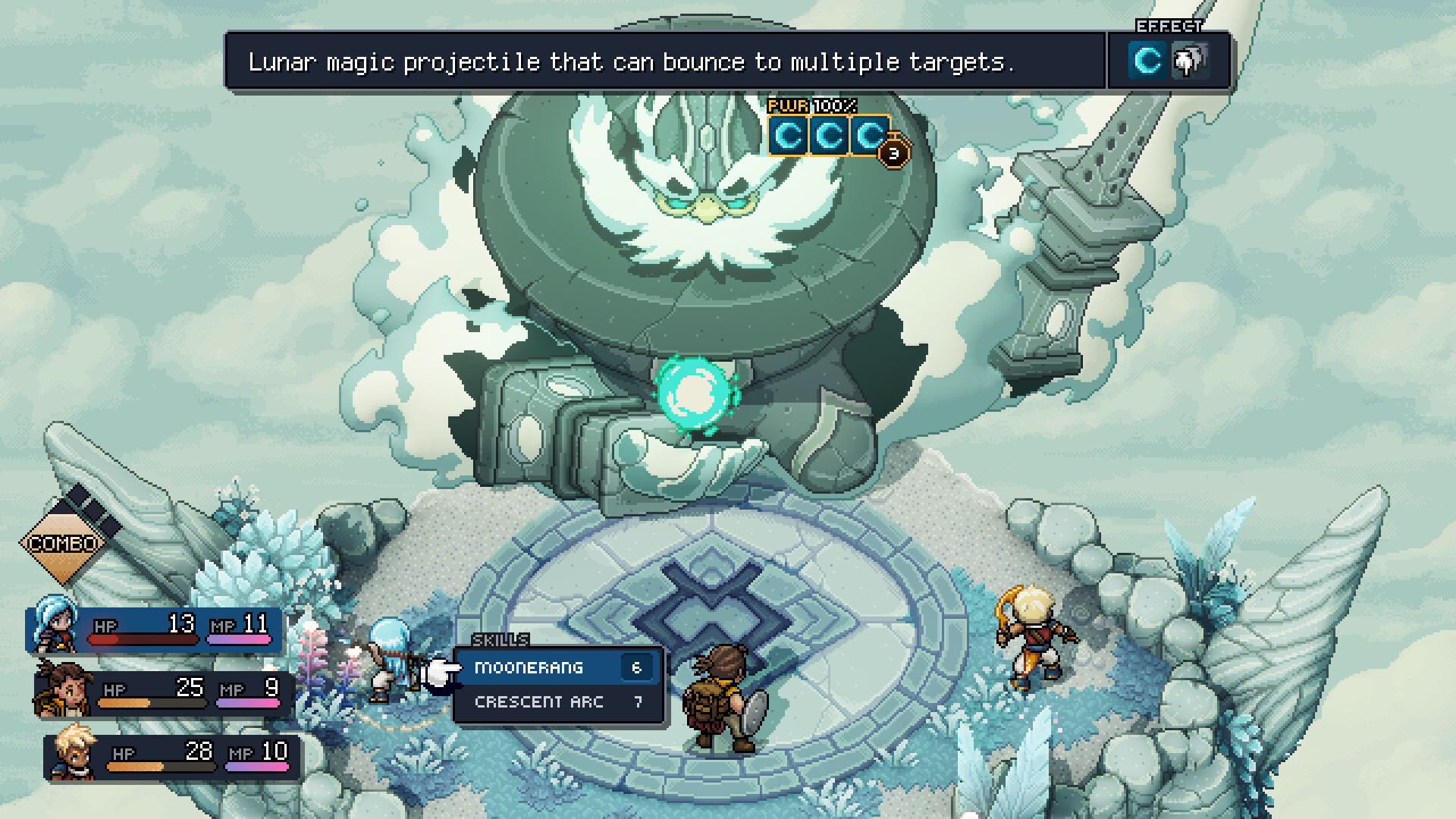
The thing that earns Sea of Stars genuine respect is its combat system, which takes the active-time interrupt mechanic and builds something more demanding around it. Every enemy attack carries a row of icons — specific damage types required to break it before it lands. Hit enough of the right types on your turn, and the attack is cancelled; fail, and you eat it at full force. This lock-break system forces you to think about ability sequencing every single round rather than coasting on whoever has the highest attack stat.
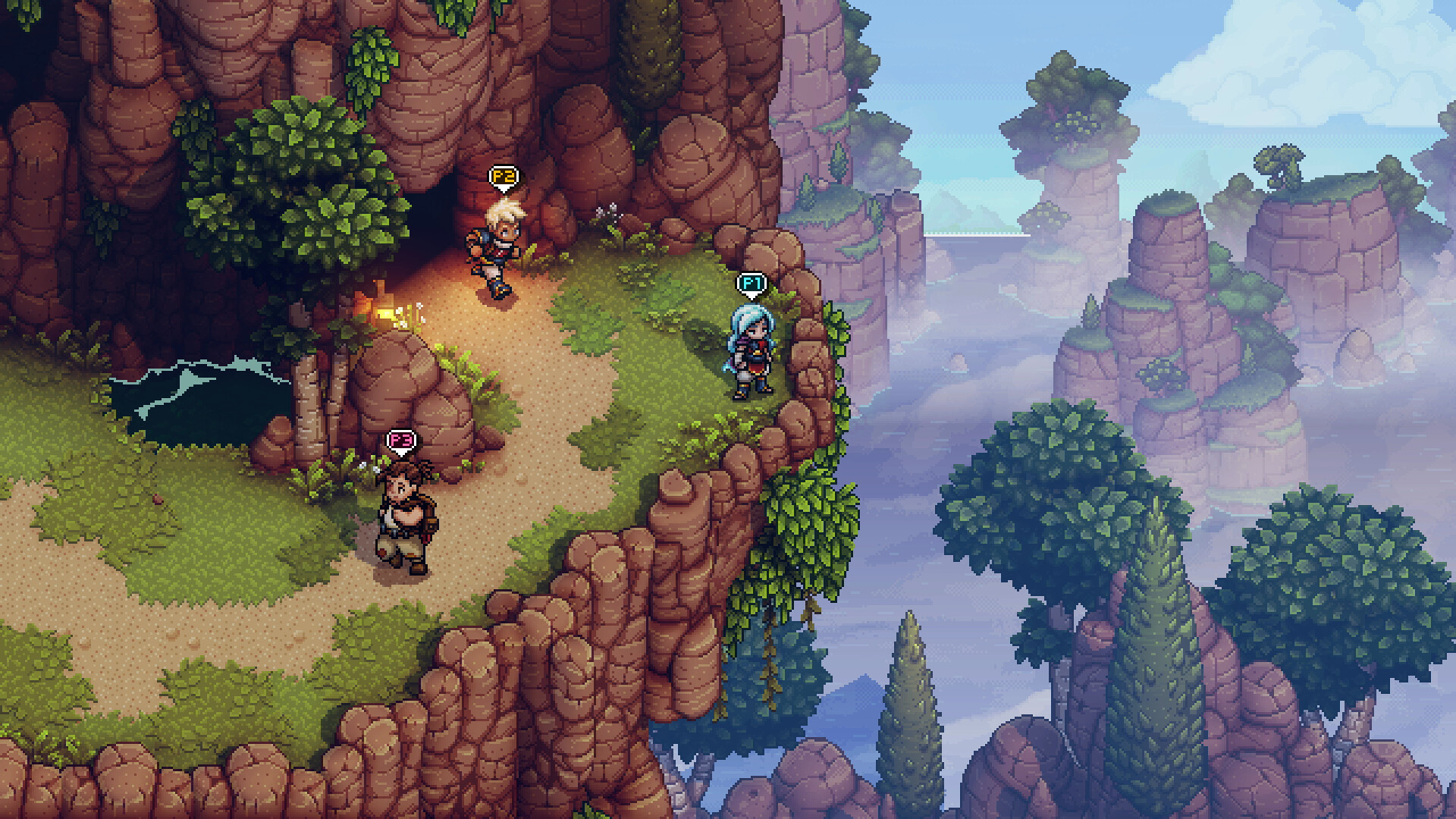 Atmospheric detail in Sea of Stars.
What makes it particularly satisfying is the timed-hit layer sitting underneath. Pressing a button at the right moment during your own attacks deals bonus damage; the same applies to blocking incoming hits. These aren't new ideas — Super Mario RPG was doing timed hits in 1996 — but Sabotage integrates them tightly enough that the combat never becomes purely menu-driven. You are always physically present in each exchange, not just issuing orders. Late-game fights against bosses like Erlina or the Fleshmancer's various lieutenants become these genuinely tense puzzles where you're managing resource generation, lock targets, and live inputs simultaneously.
There is one caveat worth naming: on standard difficulty, the game is not particularly punishing. You can get away with sloppy play for a long time. The Relict difficulty modifier addresses some of this, but it wasn't available from the start and required a patch. For players who wanted the lock-break system to truly bite, the baseline game was occasionally too forgiving to show them what the design was capable of.
A world that actually wants to be explored
The overworld is one of the most thoughtfully constructed in recent memory, and that's a specific claim: Sabotage avoided the mistake of making traversal purely functional. Zale and Valere can climb walls, swing off handholds, and swim through currents from almost the very beginning, which means the world never feels like a series of corridors with prettier wallpaper. The Stonemasons Outpost, a mid-game hub built into a cliffside, is the kind of location you actually want to sit in for a moment before moving on.
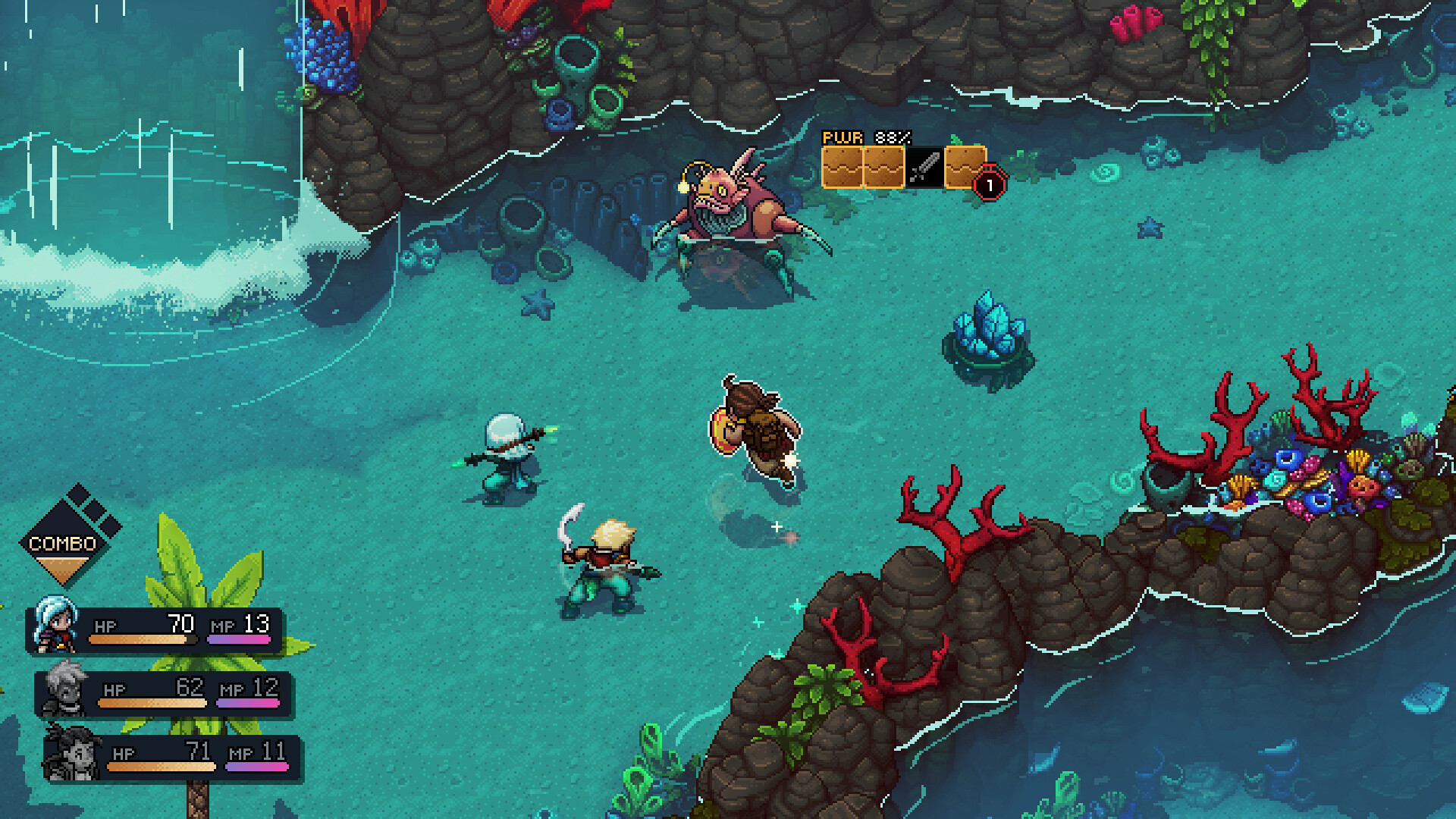 Combat encounter in Sea of Stars.
The cooking and collectible systems are light but pleasant; the fishing minigame is surprisingly absorbing given that fishing minigames are usually either a chore or a waiting simulator. None of these feel like content-padding checklist items, which is something even games with much larger budgets frequently fail at. The world rewards curiosity with small environmental storytelling beats rather than waypoint markers, and it trusts you to find things rather than funnelling you toward them.
Where the writing earns its keep — and where it doesn't
Boulanger's script is at its best in the smaller moments: a campfire conversation between party members, a dry line from Garl that undercuts the drama just enough to feel human. Garl himself is the standout character, a non-magical childhood friend who has no business being in a war between alchemical monsters and yet refuses to leave. His arc is genuinely affecting in a way that doesn't announce itself loudly.
The larger plot, though, develops a certain rigidity in its second stretch. The story introduces time travel mechanics and a meta-narrative layer involving the Archivist character that feels conceptually interesting but lands with less emotional weight than it seems to be aiming for. The Fleshmancer is a compelling villain in the abstract — a figure motivated by grief and transformation — but his presence is diffuse; you feel his influence more than you encounter him. For a game that clearly studied how Chrono Trigger built its antagonist dread, it's a notable gap.
The writing for Seraï, a playable guest character added via a Kickstarter stretch goal, is slightly uneven in a different way — her backstory is given substantial setup but relatively hurried resolution compared to the core trio. She's mechanically excellent; her combo attacks with Zale and Valere are some of the most kinetic sequences in the game. The writing just doesn't quite catch up to how much screen time she receives.
The art is doing the heavy lifting it needed to
Eric W. Brown's pixel art is exceptional in ways that screenshots don't fully communicate. The lighting system — built around layered dynamic light sources that shift with time of day — gives environments a depth that most pixel-art games can't achieve because they treat sprites and backgrounds as fundamentally separate layers. Here they're integrated; Zale and Valere cast actual shadows. The Mountain Trails at dusk, with the sun dropping behind a ridge as torchlight starts to pick up, is the kind of image you remember.
Yasunori Mitsuda contributing guest tracks to Rainbowze's soundtrack was a choice that generated enormous goodwill before launch, and it was earned. Mitsuda's contributions sit naturally alongside the original compositions rather than towering over them, which would have been the embarrassing outcome. The Sacrosanct Spires theme in particular holds up against anything in Mitsuda's own back catalogue. Rainbowze, for his part, turns in work that should get him far more name-recognition than he currently has.
Where Sabotage is actually standing on that ladder
Comparisons to the JRPG canon are inevitable, so let's be direct about them. Sea of Stars is not Chrono Trigger. It doesn't have that game's structural density or its mechanical surprise. It is probably not as emotionally complete as Disco Elysium or as systemically rich as Baldur's Gate 3 if you're measuring across the broader RPG field. But those comparisons mostly illustrate how high that ceiling is, not how short Sea of Stars falls.
What it does better than almost any nostalgia-adjacent RPG of the last several years — better than I Am Setsuna, better than Octopath Traveler's first entry, arguably better than Bravely Default II — is feel like a complete, authored thing rather than a genre exercise. The system design, the art, the music, and the pacing are pulling in the same direction. That's rarer than it should be.
A few honest reservations before the score
The encounter rate is handled gracefully — enemies are visible on the field — but there are stretches of the late game where dungeon layouts feel slightly padded, as if Sabotage knew they needed more time before the next story beat and filled it with one too many rooms. Not enough to derail anything; enough to notice. There's also a late-game twist that the community has largely appreciated but which I found slightly convenient in how it resolves a narrative problem that would have been more interesting to sit with.
Neither of these things meaningfully undercut the experience. Sea of Stars earns the comparison to its inspirations not by being as mechanically complex as them, but by understanding what made those games feel alive — the sense that the world had interiority, that every location had a reason to exist beyond its place in the quest log. Sabotage didn't just build a love letter. They built something you'd actually want to read.
Editorial scoring
Reader Q&A
How long does it take to finish Sea of Stars is nostalgia that remembers how to dream?
Main story runs around 47 hours depending on how thoroughly you explore. Completionists can spend 2-3× that.
Is Sea of Stars is nostalgia that remembers how to dream good for newcomers to Retro JRPG?
For total newcomers, expect a 5-8 hour ramp-up. Once you internalize the loop, it clicks.
Which platform should I play Sea of Stars is nostalgia that remembers how to dream on?
Steam Deck handles this title well — verified compatibility on most recent patches.
Was Sea of Stars is nostalgia that remembers how to dream worth the launch-day price?
Released in 2023, and as of writing it holds up. Wait for a sale if you're price-sensitive — major discounts arrive within 6 months.
Are there DLCs or expansions worth picking up?
Wait for the Game of the Year edition — it bundles everything at a fair discount.
What did Sabotage Studio get right (and what could be better)?
Strongest: art direction, audio design, set-piece variety. Weakest: late-game balance and a few persistent quest-log bugs.
Reader comments