
Los Santos still has teeth, eleven years later
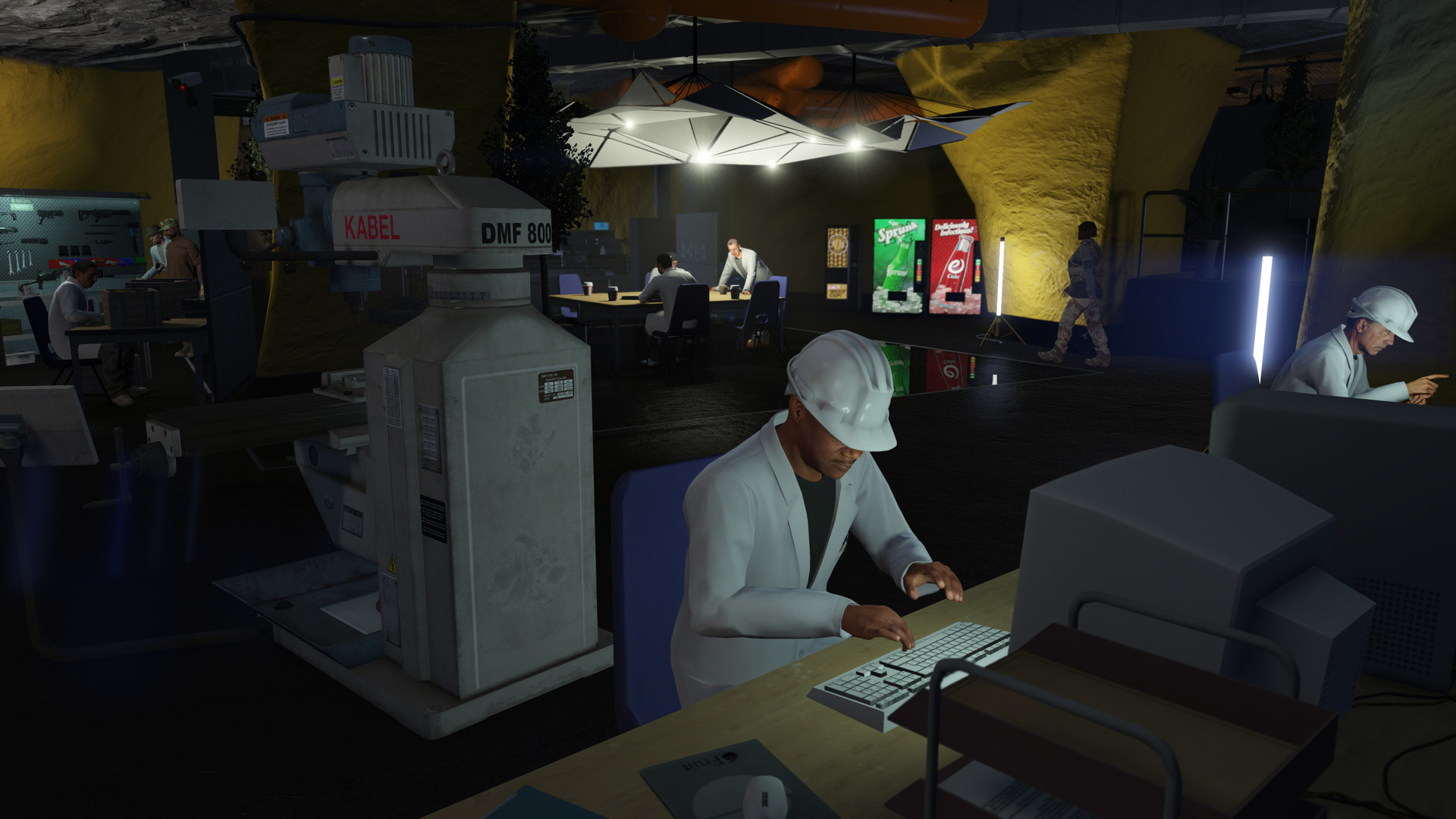
There is a moment early in Grand Theft Auto V where Trevor Philips drives a pickup truck through the Alamo Sea at sunrise, country radio bleeding out of the speakers, and a freight train cuts across the horizon maybe two hundred meters ahead. Nothing is happening. No waypoint is blinking. The game is not asking you to do anything. It is just a landscape at a specific hour, rendered with the kind of attention that makes you slow down without being told to.
GTA V turned eleven in September 2024. Rockstar has ported it to three console generations and sold somewhere north of 200 million copies. That context makes any serious evaluation slightly surreal — this is not an obscure thing that needs excavating. But the question worth asking is not whether it sold or whether people still play it. It is whether the game itself, the single-player campaign that most people finished once and forgot, actually holds together as a piece of interactive design. Mostly, it does. Some of it doesn't. The details are what make that distinction interesting.
Three characters, one city, and how that structure earns its ambition
The three-protagonist system is still the most structurally inventive thing Rockstar has built into a mainline GTA. Michael De Santa is a retired criminal in a glass house in Vinewood Hills, grinding his teeth at his own domesticity. Franklin Clinton is grinding upward from Strawberry with real intelligence and limited options. Trevor is chaos with a backstory. Switching between them mid-mission — the camera pulling back to satellite view before crashing down somewhere else in Los Santos — never gets old as a piece of visual grammar, even now.
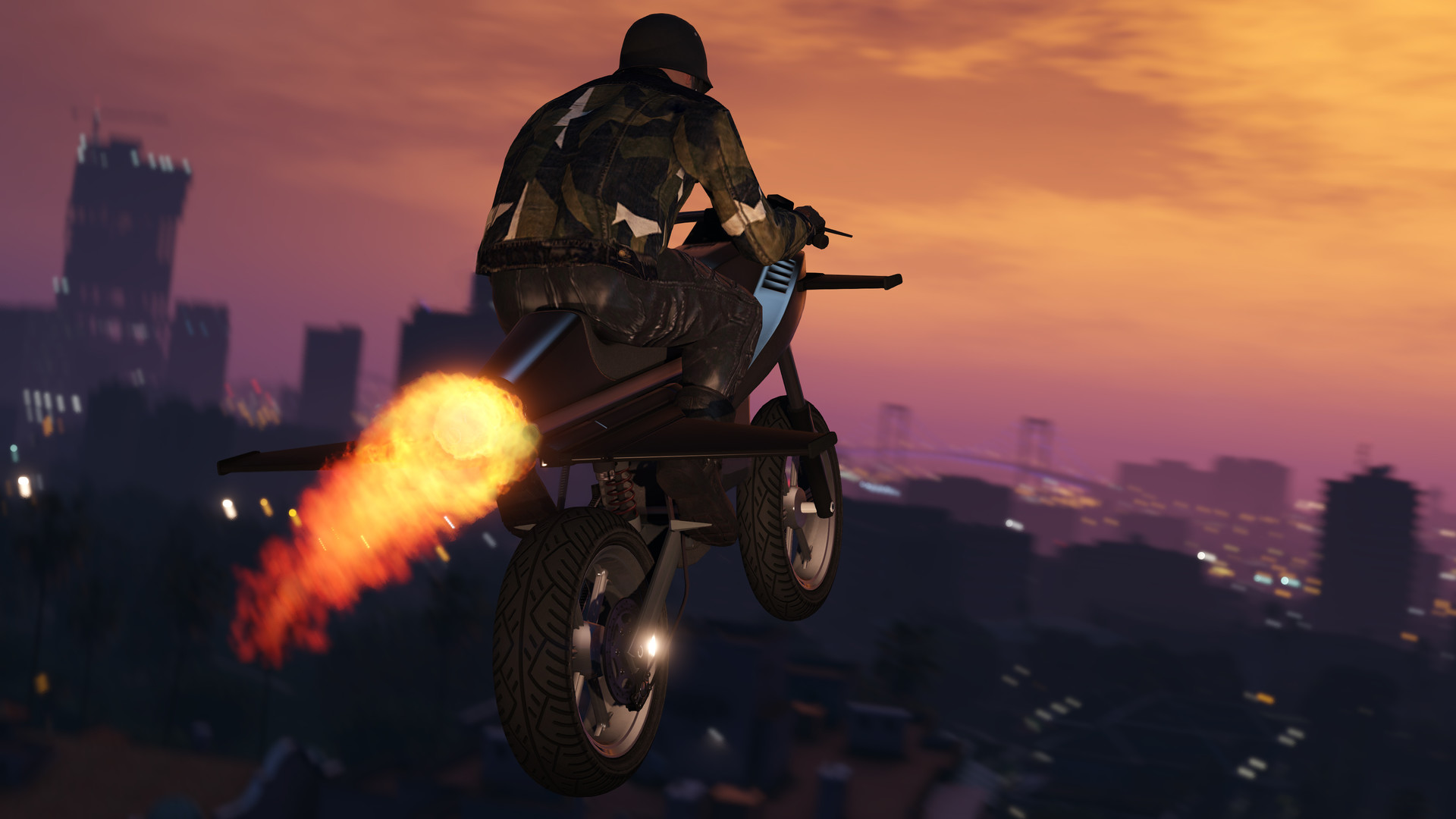 Atmospheric detail in Grand Theft Auto V.
What the structure does well is give the city itself three different temperatures. Franklin's South LS feels tight and surveilled; every cop encounter has weight. Michael's Vinewood is wide, paranoid, and weirdly hollow. Trevor's Blaine County is hostile geography where civility never quite applies. These aren't just aesthetic shifts — they affect how you move through space, what you avoid, where you feel exposed. That's the game's real achievement, not any individual set piece.
The friction between the three is scripted better than it's often given credit for. Michael and Trevor's shared history — the botched North Yankton job, the decade of silence — gives their scenes a specific kind of unease that most crime fiction fumbles into melodrama. GTA V doesn't always resist that either, but when it's restrained, it lands.
The heists are still the standard
The Paleto Score. The Jewel Store Job. The Bureau Raid. These heist sequences remain among the best-designed missions in open-world games, and that is not nostalgia talking — it's structure. Each heist requires a setup phase where you acquire crew, equipment, and an approach. The Jewel Store Job alone offers a loud approach (armed robbery, tear gas grenades deployed through ventilation) or a smart approach (posing as pest-control workers). The game executes both with entirely different energy. That kind of branching isn't new, but the production quality behind each path is unusually even.
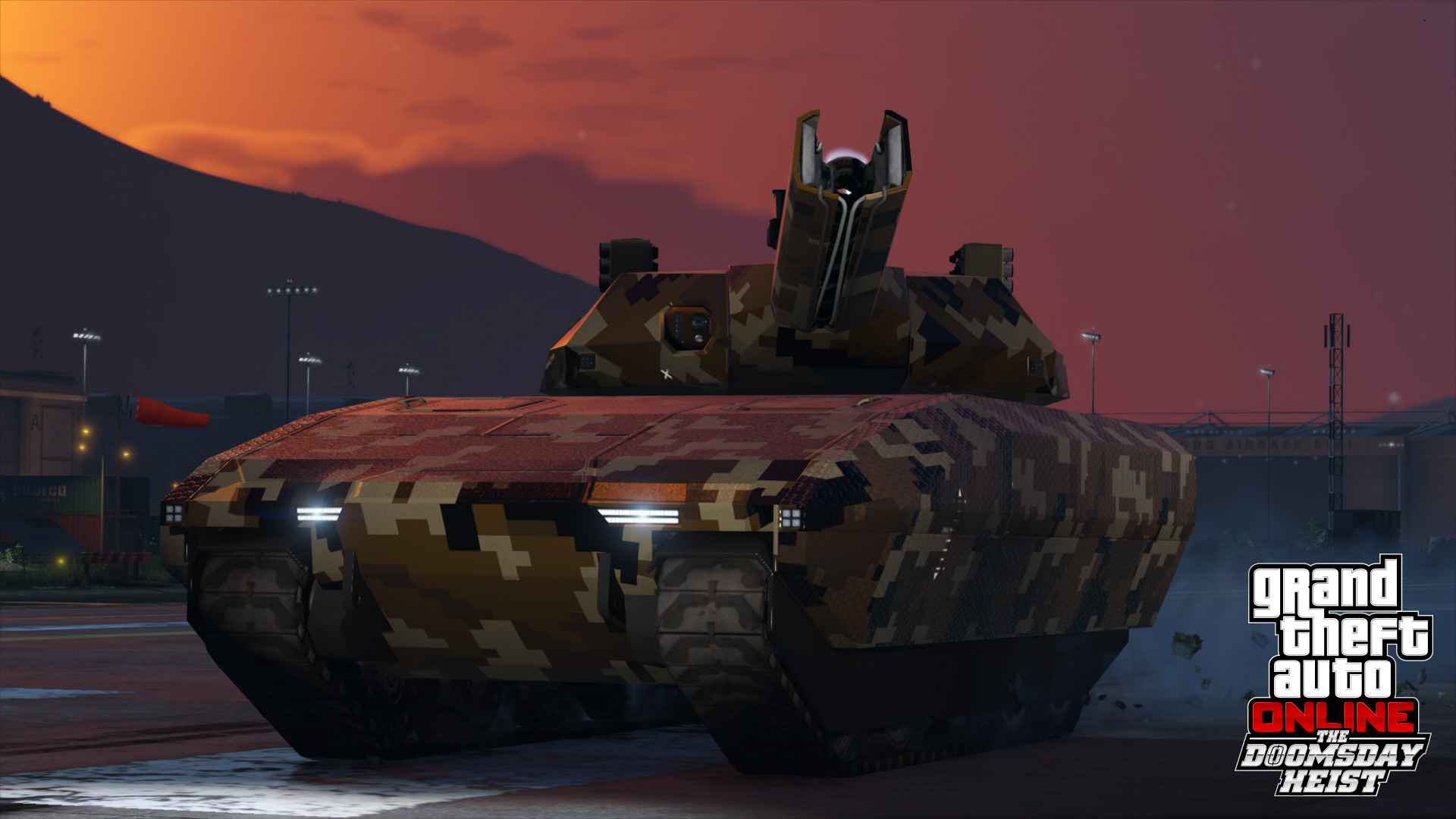 Combat encounter in Grand Theft Auto V.
The crew system adds a small layer of genuine consequence. Hire Packie McReary as your gunman and he's competent but costs more of the cut. Hire cheap talent and someone might drop a bag of cash in a tunnel while you're trying to exit on a dirt bike. That specific scenario, the Bugstars approach on the Jewel Store Job, is one of the few times an open-world game made me genuinely annoyed at a fictional person for their fictional incompetence. Larian Studios gets player-provoked chaos in Baldur's Gate 3 through entirely different means; Rockstar gets it through consequence architecture.
The final heist, The Big Score, is slightly less elegant — too large, too many moving pieces — but it commits to spectacle in a way that feels earned rather than inflated. The Union Depository sequence in particular has a clarity to its geography that bigger, messier open-world climaxes rarely manage.
Where the campaign sags
The middle section of the campaign is genuinely bloated. There is a stretch roughly between the Merryweather heist and the FIB missions where the game loses its sense of direction. You are doing favors for multiple parties simultaneously — the corrupt FIB agents Norton and Sanchez, the Merryweather mercenaries, Devin Weston — and none of those threads have the propulsive clarity of the heists. The missions themselves are competent but feel like filler: repossessing cars for Weston, driving across the map to collect something for Lester. The pacing flattens.
Devin Weston is also a recurring problem. As a villain, he's designed to be odious — a tech-sector billionaire parody who name-drops disruption philosophy while having people killed. The satire is legible, maybe too legible. Compared to the institutional menace Rockstar builds into the FIB subplot, Weston feels like a cartoon whose edges were drawn with a thick marker. The game clearly knows this; it disposes of him quickly in the finale. But getting there requires spending more time with him than he earns.
The Merryweather heist itself — where the protagonists recover a superweapon and then immediately give it back — is probably the game's most structurally awkward decision. It is explicitly designed to make players feel cheated. That's a bold authorial move, and Rockstar does explain it within character logic, but it doesn't stop the mission from leaving an odd aftertaste.
Los Santos as a physical space
Strip the missions out entirely and Los Santos remains a remarkable piece of environmental design. The city is built on a Los Angeles grid, but the proportions are compressed in ways that make it feel walkable as a game map without feeling toy-like. The transition from downtown LS into the Vinewood Hills into the Blaine County desert takes maybe four real-time minutes by car — but each zone reads as genuinely distinct without requiring a loading screen or an explicit border crossing.
The ambient detail is where Rockstar's production budget becomes visible in the best way. Pedestrian dialogue changes depending on the neighborhood. Radio stations react to the weather and time of day in small ways. The vehicles that populate the freeway in Rockford Hills are different from the vehicles on the freeway through Strawberry. None of this is flagged by the game. It just exists, and you notice it gradually, which is the correct way to build a convincing world.
The Rockstar Editor and the updated visual mode in later-generation versions add surface gloss, but the underlying geometry was already doing most of the work. Compare it to Saints Row IV's Steelport, which is physically competent but thematically incoherent — Los Santos has a specific cultural argument embedded in its architecture. That argument is not subtle (it's about aspiration, surveillance, and performative wealth), but it is consistent.
The radio stations deserve more credit than they get
Los Santos Radio is not incidental. The licensed tracks — Flying Lotus on FlyLo FM, Wavves on Non-Stop-Pop FM, Tangerine Dream's scoring of the ambient stations — function as genuine editorial choices. Switching to Rebel Radio during Trevor's sequences isn't just thematic flavor; it's the game tuning the emotional register of a scene without using cutscene dialogue. That's economical storytelling at a craft level.
The talk radio stations and the fake advertisements embedded throughout are also still sharp. The commentary on pharmaceutical marketing, on social media culture, on the particular anxiety of the post-2008 American economy — most of it reads as accurate rather than dated. A few jokes have curdled. The trans character writing in particular has not aged well and is worth naming plainly rather than burying in a hedge. The game's social satire is uneven in exactly the way that comedy from 2013 tends to be.
Should you play it now
If you finished it in 2013 and haven't returned: yes, probably. The campaign is longer than you remember — around 30 hours if you engage with the side content — and looser in its middle than memory flatters. But the heist design, the three-character structure, and the quality of Los Santos as an environment are specific achievements that the open-world genre has not consistently matched in the decade since.
If you've never played it: the on-ramp is still relatively smooth. The driving model is arcade-forgiving; the wanted system is punishing but readable. The camera during gunfights is occasionally the game's own worst enemy, and the cover mechanics creak by 2024 standards. These are real concessions.
GTA VI is coming, and the footage Rockstar released in late 2023 suggests a production that will likely displace V in conversation within a year of release. That's fine. But V was never going to be permanent — it was going to be good for a specific stretch of time and then recede into reference. Eleven years in, it's still earning its references. The truck at the Alamo Sea at sunrise still works. That's not nothing.
Editorial scoring
Reader Q&A
How long does it take to finish Los Santos still has teeth, eleven years later?
Main story runs around 32 hours depending on how thoroughly you explore. Completionists can spend 2-3× that.
Is Los Santos still has teeth, eleven years later good for newcomers to Open-World Action?
It depends. The systems are deep but the tutorial does a fair job. Veterans of Open-World Action will feel at home faster.
Which platform should I play Los Santos still has teeth, eleven years later on?
Steam Deck handles this title well — verified compatibility on most recent patches.
Was Los Santos still has teeth, eleven years later worth the launch-day price?
Released in 2013, and as of writing it holds up. Wait for a sale if you're price-sensitive — major discounts arrive within 6 months.
Are there DLCs or expansions worth picking up?
The base game is complete; expansion DLC adds 10-15 hours of additional content if you want more.
What did Rockstar Games get right (and what could be better)?
Strongest: art direction, audio design, set-piece variety. Weakest: late-game balance and a few persistent quest-log bugs.
Reader comments